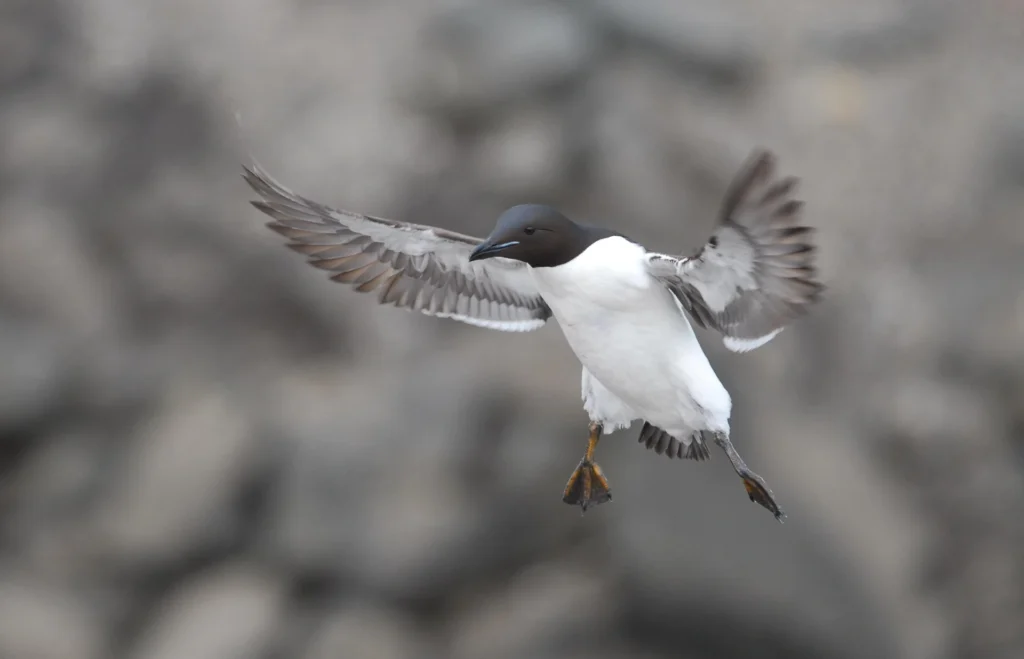

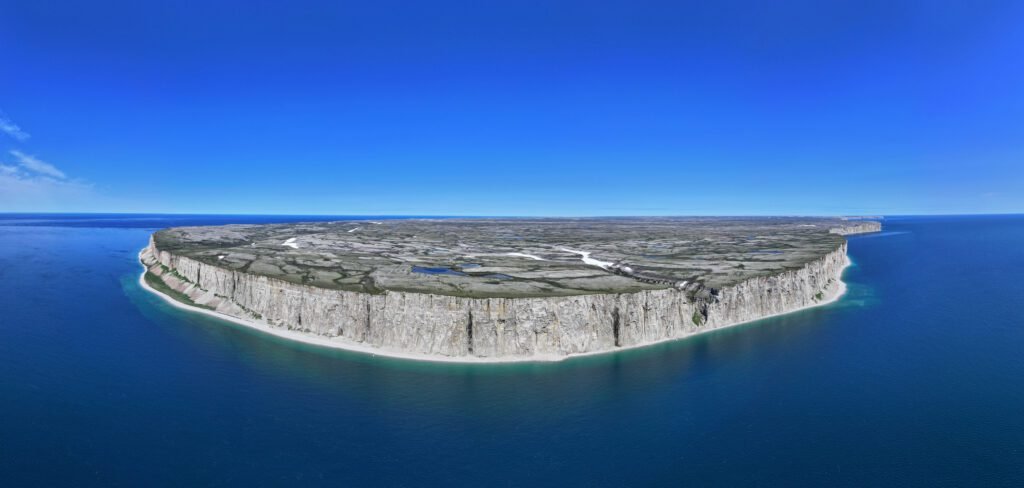
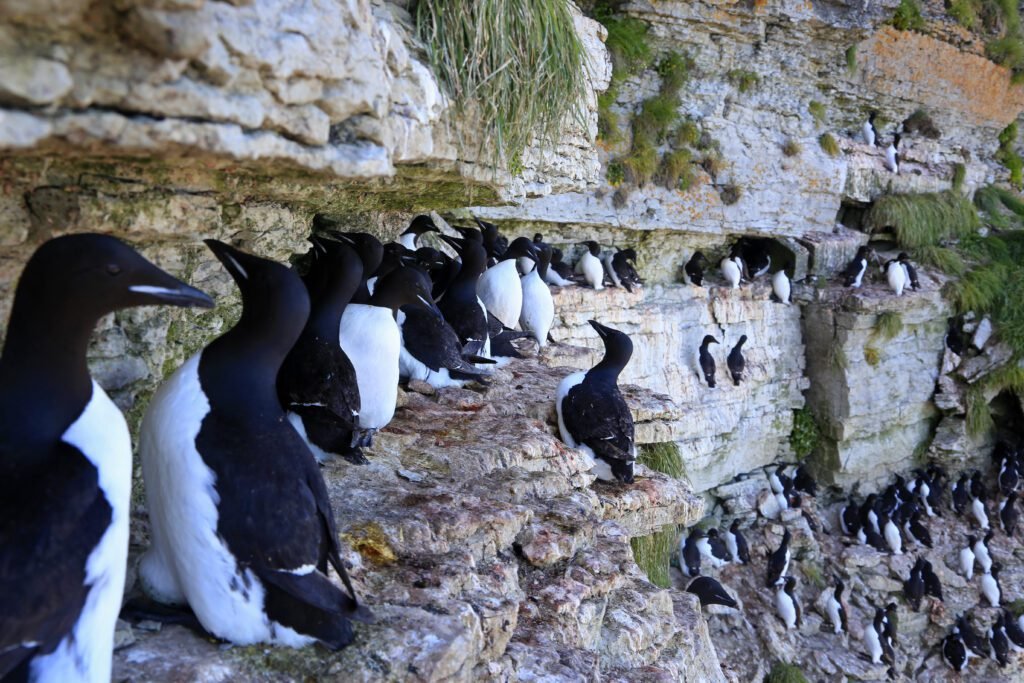
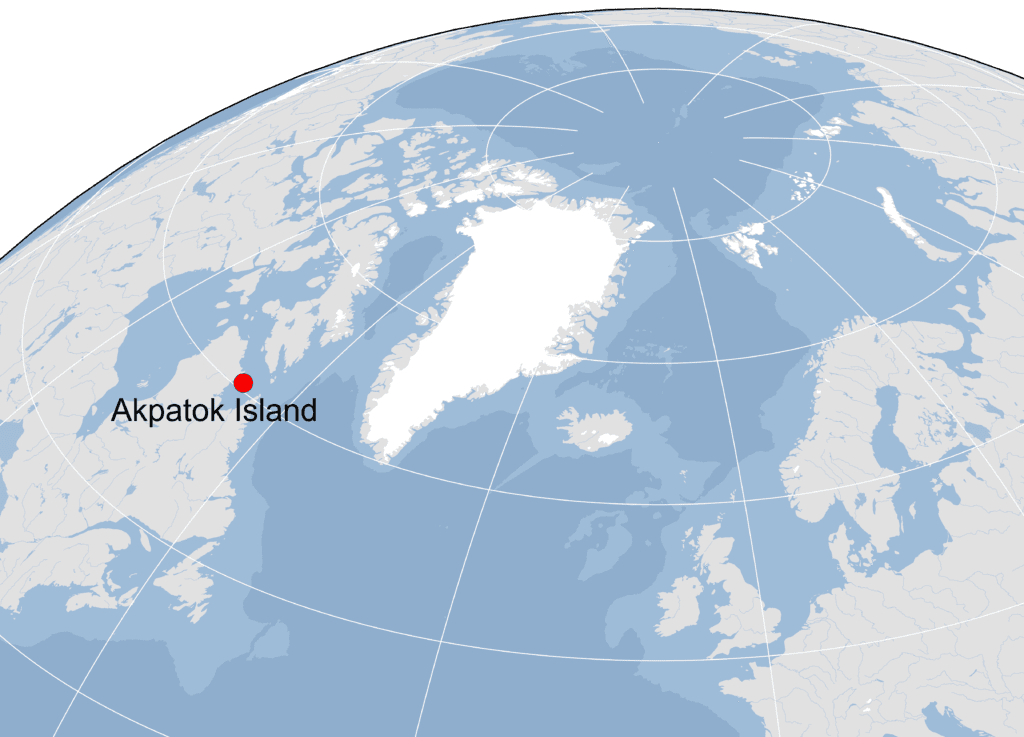
Akpatok Island (60.416°N x 68.133°W) is the largest island in Ungava Bay with an area of 903 km2. Located about 90 km from the closest Inuit communities, this island is uninhabited nowadays. It features sheer limestone cliffs reaching heights of up to 260 m, providing suitable habitats for breeding birds. A few seabird species have been reported to breed on this island, including Thick-billed Murres, Glaucous Gulls, and Black Guillemots, as well as a large number of polar bears taking advantage of the high density of seabirds. Akpatok Island supports one of the largest Thick-billed Murre colonies in the world and is estimated to host about 20% of the Canadian population. Birds nest at two separate colonies, extending over 13.4 km in the north of the island and 7.5 km in the south.
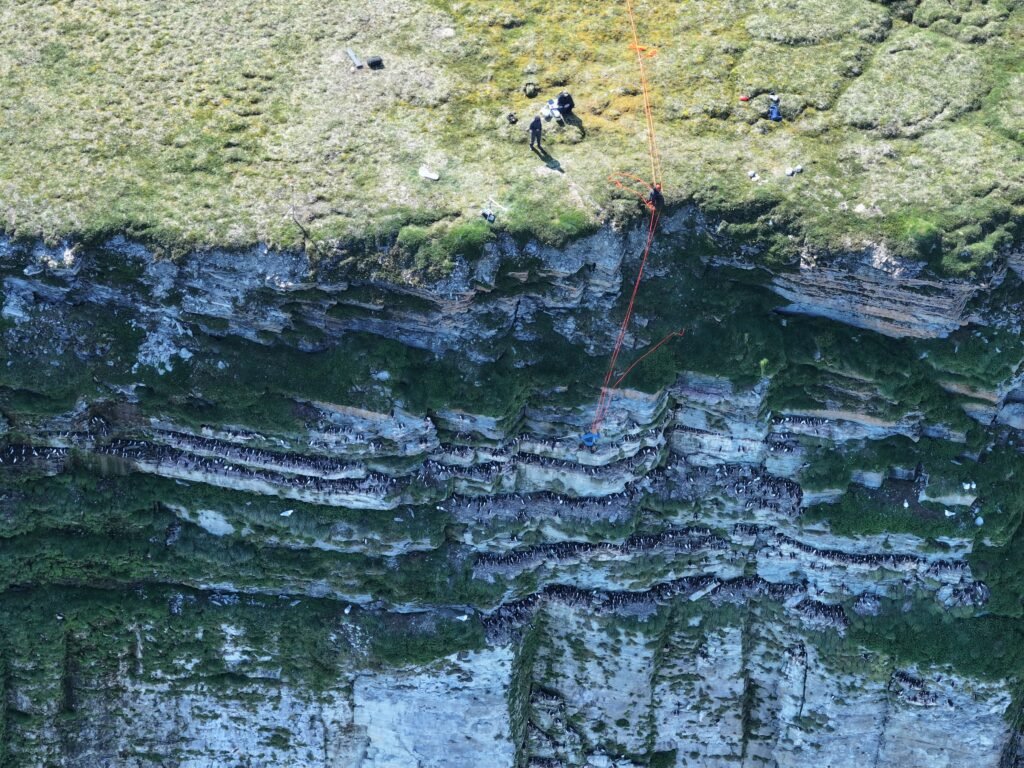
The exact number of breeding pairs is currently uncertain. The last breeding bird census on Akpatok was conducted in the early 1980s, estimating the population to be between 180,000 and 250,000 breeding pairs at the North colony and between 120,000 and 150,000 breeding pairs at the South colony. In July 2025, a census of both colonies was conducted, and counting is ongoing.
The first tracking devices were deployed on breeding Thick-billed Murres in 2025. Birds were equipped with GPS devices to document the foraging range of Thick-billed Murres from both colonies during the breeding season. Additionally, GLS devices were deployed to document the year-round distribution of murres and the timing of their migration. This project on Thick-billed Murres at Akpatok Island aligns with the objectives of the Oceans Protection Plan from the Government of Canada and the large-scale monitoring program of SEATRACK.
Seatrack partner
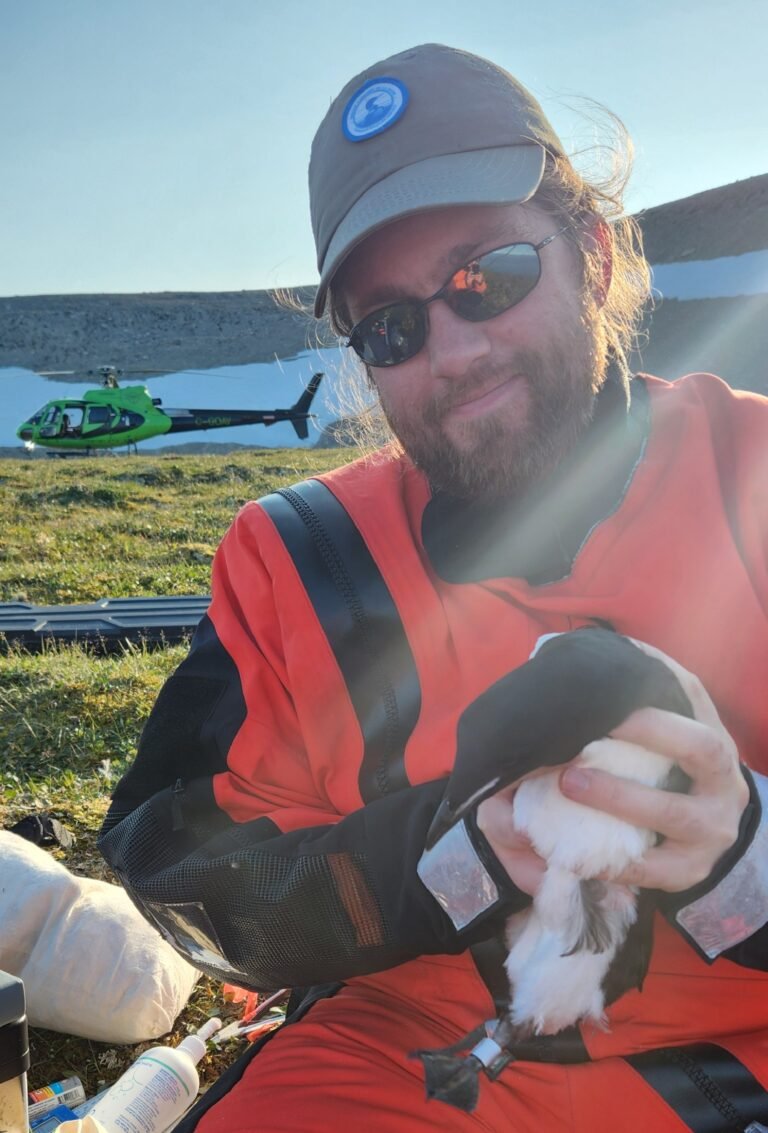
Yannick Seyer
Environment and Climate Change Canada
Data availability